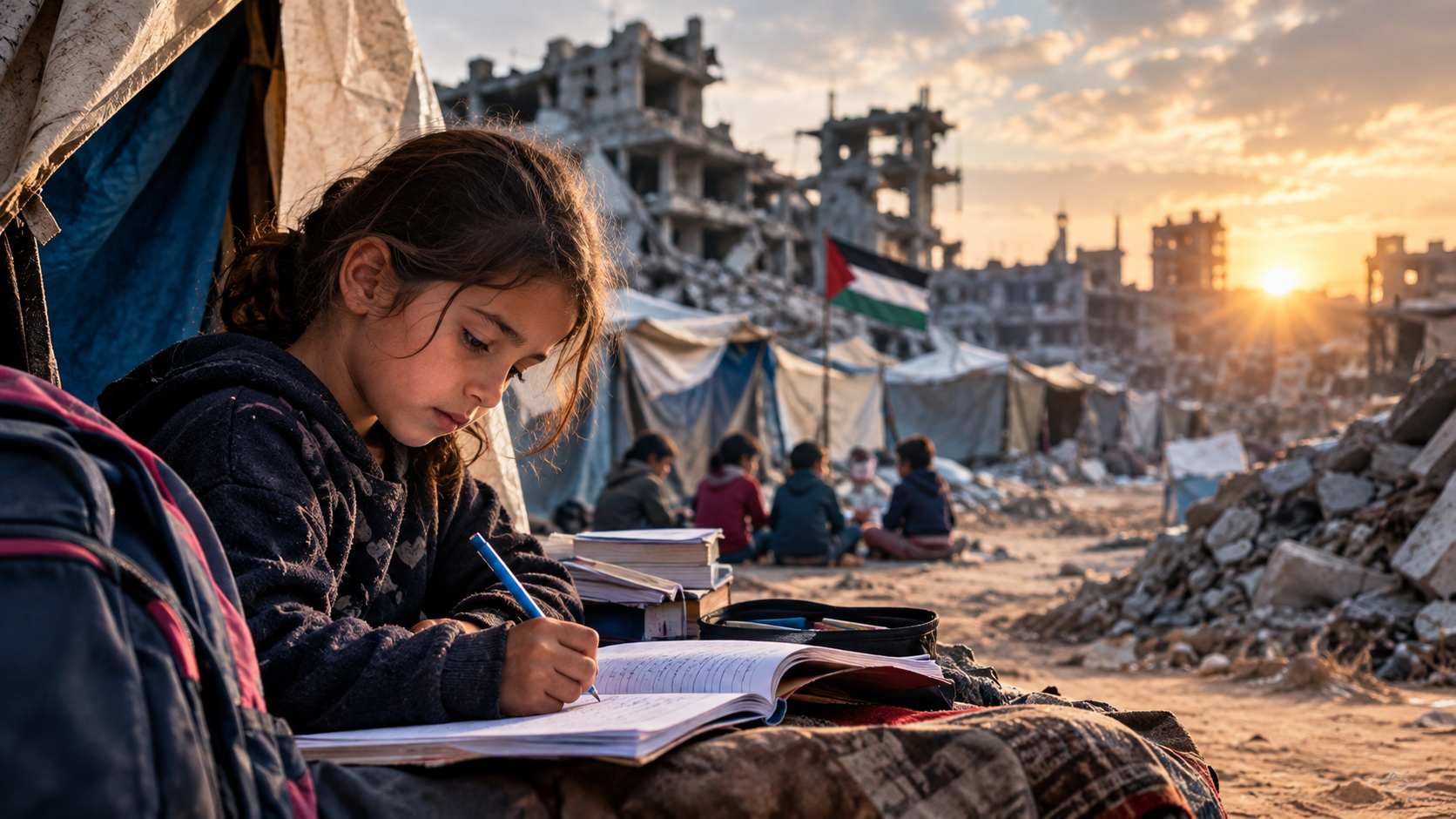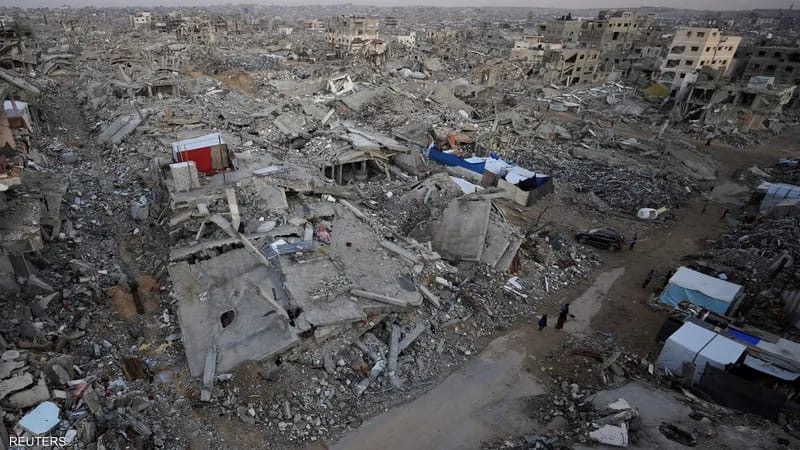
The battle over Gaza is not confined to a bombed geography, demolished homes, or people confronting an unrelenting war machine. Another battle is unfolding in a space that is far deeper and more dangerous: a battle over the image of the Gazan people, their minds and identity, and the energies and capabilities that years of blockade have produced. When the minds of those who have memorized the Book of Allah become a target of accusation and skepticism, we are no longer facing a passing political disagreement. We are facing an attempt to reduce human beings to their affiliations and to confiscate their achievements through the gateway of political rivalry.
Gaza has revealed, despite the blockade and the collapse of the foundations of life, scientific, engineering, and creative capabilities that deserve research and documentation, rather than being buried beneath the rubble of political bickering. Memorizing the Qur’an does not conflict with science; religiosity does not diminish competence; and ideological affiliation does not deprive a person of the right to have their abilities and achievements recognized. The problem, however, begins when achievement becomes a burden on the discourse of political rivalry, and when some, unable to confront the facts, resort to attacking those who produced them.
This is a battle to assassinate symbolic standing before discussing achievement, and to confiscate the mind by distorting identity. It is an attempt to reshape Gaza’s image in public consciousness, as though minds nurtured under siege deserve to be seen only through the lens of political conflict.
From Qur’an Circles to Laboratories of Creativity… Deconstructing the Stereotypical Image of the Gazan
The paradox is not that Gaza produces creative minds despite the blockade. The real paradox is that some remain incapable of grasping that a person who carries the Qur’an in their heart is equally capable of carrying knowledge in their mind and transforming it into innovation and achievement. Religiosity is not the opposite of science, and Qur’an circles are not walls that isolate the mind from laboratories. The intellectual and moral development of human beings should not be interpreted as contradictory to scientific and engineering competence.
Over many years of deprivation, Gazan society has accumulated experience and capabilities across multiple fields. Limited resources have compelled it to search for unconventional alternatives, giving rise to examples of innovation and local manufacturing under exceptional circumstances. This is an expression of what might be called “The Gazan Engineering of the Impossible”: a reality in which the scarcity of resources becomes an intellectual challenge, and the search for solutions becomes a necessity rather than a luxury.
Yet acknowledging these capabilities does not mean turning them into a myth or exempting any experience from scientific evaluation and documentation. Genuine achievement needs no exaggeration to deserve respect, nor does it require political affiliation to be recognized. Gaza, which has produced teachers, researchers, engineers, and doctors, must not be reduced to a stereotypical image that denies the diversity of its people's talents or turns their religious identity into a barrier to recognizing their competence.
When Political Rivalry Turns into an Attack on Identity and Competence
When political discourse fails to engage with an achievement, it sometimes begins searching for a vulnerability in the identity of the person behind it. Disagreement thus shifts from criticizing positions and choices to putting affiliations on trial, and from scrutinizing experiences to attacking individuals. This is one of the most dangerous forms of “the symbolic assassination of competence”: what the mind has produced is not discussed; instead, its owner is targeted because of their religious or political background, as though acknowledging their abilities were a concession in the battle of polarization.
Even more dangerous is when this logic develops into a reciprocal discourse of contempt, accusations of treachery, and sweeping generalizations. Stereotypical images of political movements and factions are invoked, and affiliations are used to distribute certificates of patriotism and virtue, rather than subjecting everyone to a single standard: What have they contributed to society? And what responsibility do they bear for their choices and decisions?
Criticizing any faction or political experience is a legitimate right; indeed, it is a necessity imposed by the nature of public life. But this right loses its value when it turns into collective defamation or an assault on religious and social identity. Memorizing the Qur’an must never become an accusation, just as political affiliation must never become immunity from criticism.
The most dangerous consequence of such political bickering is that it shifts the conflict from the arena of ideas to the arena of personal dignity, replacing political accountability with battles of vilification. In doing so, society's energy is wasted on settling scores instead of directing it toward building human capacity and protecting social cohesion.
The Battle Over the Narrative… Who Has the Right to Define Gaza and Present Its Minds to the World?
The battle over Gaza is no longer limited to controlling territory or imposing political realities. It also involves a struggle over the narrative and the image of this society that will remain in the world's memory. While Gazans struggle to secure their right to life, education, and creativity, political and media discourses compete to define them and reduce their experiences to narrow factional frameworks.
Here, the dilemma of “narrative sovereignty over Gaza” emerges: the right of society to present itself, its achievements, and its history, free from monopolization and distortion.
Gazan minds do not belong to any faction, and the achievements of its people should not become bargaining chips in the record of political competition. Likewise, documenting innovations and competencies is an academic and media responsibility that requires verifying facts and distinguishing between substantiated achievements and mobilizing rhetoric, free from exaggeration or selective exploitation.
This underscores the importance of building an inclusive Palestinian discourse that safeguards human value, celebrates scientific excellence, and grants talented individuals the recognition they deserve without making that recognition hostage to their affiliations. It makes little sense to demand that the world do justice to the Palestinian narrative while failing, internally, to do justice to one another, or allowing political rivalry to become a tool for erasing achievements.
Gaza is greater than its factions, broader than its disagreements, and too rich to be reduced to the narrative of a single party. Ultimately, the right to define Gaza belongs to its society, in all its diversity, not to campaigns of vilification or the mouthpieces of polarization.
In Conclusion… Do Not Judge Minds by the Identities of Their Owners!
Gaza does not need certificates of endorsement from its adversaries, nor does it need myths manufactured by the affection of its supporters. What it needs is fairness to the truth, documentation of achievement, and protection of human dignity.
Those who wish to criticize politics should exercise their right to do so. Those who wish to hold factions accountable should present their arguments. But attacking Qur’an memorizers, disparaging minds, and turning identity into an accusation will neither defeat an adversary nor build a homeland.
Do not turn the Qur’an into an object of political rivalry, nor turn minds into an arena for settling scores. Gaza is too great to be reduced to a faction, and too significant to have its narrative hijacked by political bickering.