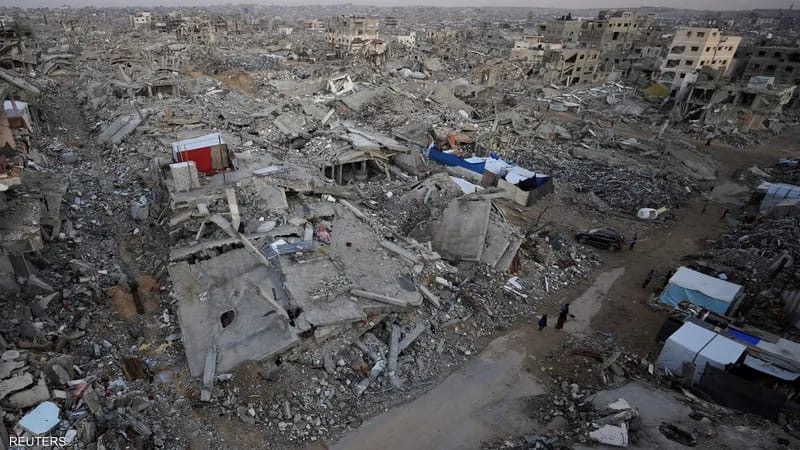
Rainfall and weather depressions in the Gaza Strip are no longer merely a threat of flooding tents. Sand dunes and sandy escarpments have turned into deadly traps for displaced people, in yet another tragic scene. A sandy escarpment collapsed onto the tents of displaced families in one of the displacement camps south of Deir al-Balah, killing five Palestinians, including three children. This has added an environmental and geological disaster to the series of humanitarian tragedies unfolding amid the absence of safe shelter, the lack of rescue equipment, and the forced reliance on residents to retrieve victims with their bare hands.
Our people in the Gaza Strip are suffering, day after day, from an increasingly bitter accumulation of humanitarian and living crises. These crises have reached a new peak with the consequences of the latest weather depression, which flooded tens of thousands of tents, threatened the lives of displaced people, and claimed the lives of innocent civilians, including children, amid an almost total collapse of shelter facilities and an already devastated infrastructure.
This suffering is not a recent development. Rather, it is the result of the cumulative effects of the blockade, destruction, and prolonged displacement, alongside the absence of safe shelter and essential services, at a time when Gaza's civilians alone are bearing the cost of all these crises.
At the same time, legitimate questions are being raised daily about the reasons behind the delay of the Administrative Committee (the National Committee for the Administration of the Gaza Strip) in assuming its field responsibilities and addressing these urgent issues. These questions are natural, understandable, and clear, particularly as people await an entity capable of coordinating relief efforts and effectively managing civilian affairs.
We emphasize that the primary responsibility lies with the occupation, which continues to obstruct the committee's entry and impose restrictions on border crossings and humanitarian aid, thereby preventing any genuine progress on the ground. Nevertheless, the continued delay places everyone before a national and humanitarian obligation that can no longer tolerate further procrastination. Accordingly, the committee must be enabled to commence its duties effectively inside the Strip without delay, efforts must be unified to alleviate the suffering of displaced people and provide safe shelter and essential supplies, and serious international pressure must be exerted to open the crossings and lift the restrictions.
The people of Gaza deserve a dignified life and effective leadership that confronts crises rather than standing by and watching them unfold. We stand with our people in their ordeal and pray to Allah to relieve their distress and grant them strength to endure these harsh circumstances.
In light of the continuing weather depression, the various emergency committees across the Gaza Strip have continued mobilizing their personnel and deploying their efforts and resources around the clock, day and night, to provide support and assistance to our people and alleviate their suffering, in an effort to limit the effects of the deep weather depression. Their work has included committees inspecting damaged tents, teams facilitating the movement of civilians and assisting them, securing the relocation and accommodation of families, providing them with essential needs, and supporting specialized crews in retrieving people who have drowned as a result of the depression, among other tasks. These efforts have become necessary due to rainfall levels exceeding their normal averages.
For their part, these joint committees and local authorities have taken it upon themselves to respond to the calls and distress appeals of civilians, deal with the ongoing weather depression with great attention, respond to people's urgent need for relief, and stand alongside them in these exceptional circumstances, despite the scale of the risks resulting from the Zionist occupation's targeting of infrastructure throughout its war and repeated aggression against the Gaza Strip.
Meanwhile, the Zionist occupation bears responsibility for this serious humanitarian, environmental, and health catastrophe. This constitutes yet another act of aggression, adding to the suffering caused by winter rainfall, as displaced people drown inside collective shelters and displacement tents across the Gaza Strip.
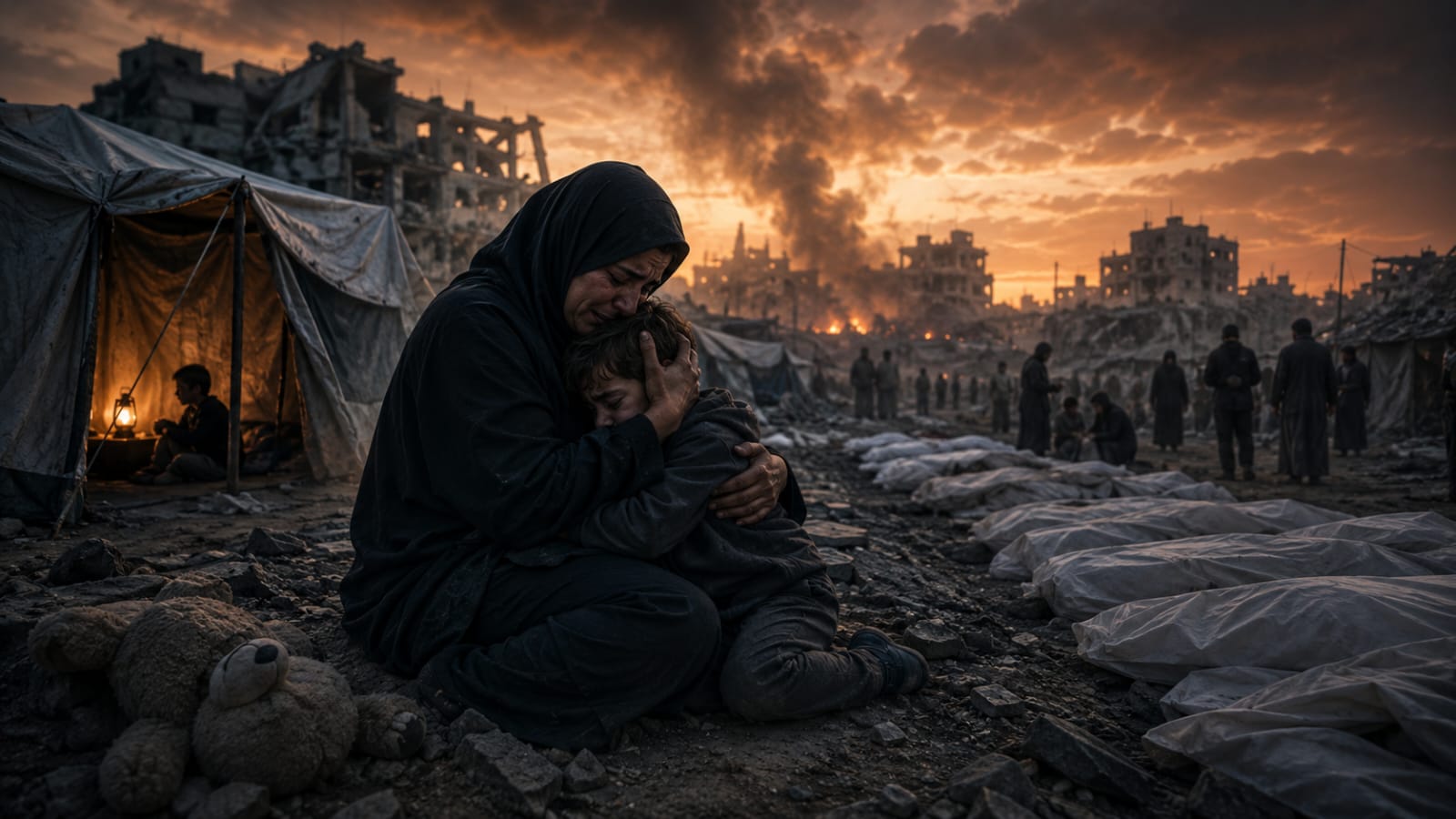
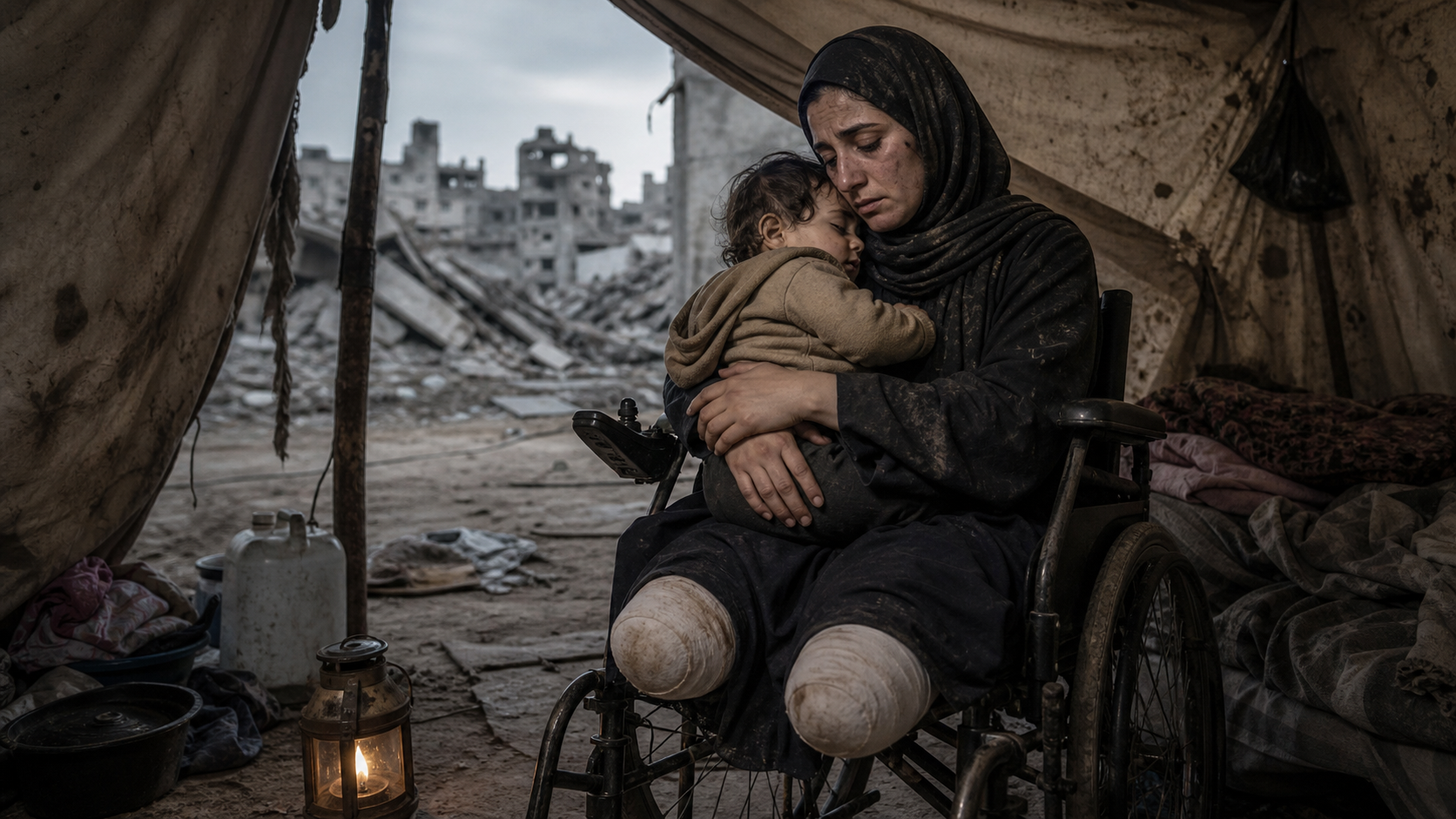
Indeed, the scene was tragic in every sense of the word. A massive mass of sand suddenly collapsed onto the tents of displaced families in the Ard al-Ribat Camp, near the Al-Baraka water reservoir, south of Deir al-Balah, burying people beneath tons of sand and rocks.
People living near the site of the incident heard screams in the darkness. Residents of the area and Civil Defense personnel rushed to the scene, relying on their bare hands and rudimentary tools.
As a result of the ongoing aggression and war against our people in the Gaza Strip, coupled with the suffocating and comprehensive blockade that has been in place for more than two decades, five Palestinians were killed, including three children and two women, while others were injured, some suffering from severe cases of suffocation.
This incident caused profound psychological and social shock throughout Gaza's communities. It has reached a point where Gazans have become accustomed to living alongside death in whatever form it comes, whether through natural death, catastrophic tragedy, or being killed by the machinery of Israeli war and aggression, whether through bombardment, gunfire, or deadly flying shrapnel. Yes, in Gaza, death is something people witness at all times and in different forms.
The most prominent obstacles included: a complete power outage; the absence of heavy machinery, bulldozers, and specialized equipment and vehicles capable of retrieving those killed or drowned inside tents as a result of the previous weather depression; near-total reliance on shovels, bare hands, and mobile phone flashlights; and the difficulty of reaching affected locations quickly due to muddy roads and continuous rainfall.
Ultimately, people were forced to retrieve the victims with their bare hands under extremely harsh conditions of cold, frost, and heavy rain.
Rescue operations are being conducted using primitive, painful, and difficult methods. Civilians and Civil Defense crews use shovels, picks, and hammers to break apart solid masses and dig manually, while relying on mobile phone flashlights for illumination. In some cases, they attempt to lift wooden panels or large rocks with their bare hands or using simple ropes.
This considerably slows rescue operations and increases the risk of suffocation or injury among those trapped. In the absence of bulldozers and specialized machinery, every minute becomes extremely precious, increasing the likelihood of a further rise in the number of victims and innocent martyrs.
Scientifically, dry sand has a degree of relative cohesion due to friction between its individual grains. However, during continuous rainfall, water penetrates between the grains, reducing friction and increasing the overall weight (water saturation increases density). As a result, the mass becomes heavy and unstable.
When saturation reaches a critical point, the sandy escarpment or dune collapses under the force of gravity, particularly if it is sloping or has previously been subjected to excavation.
On the ground, this is precisely what happened. Heavy rainfall rendered the escarpment above the tents unable to withstand the conditions, causing it to slide down all at once.
The result was a difficult and painful catastrophe, with grief overshadowing the already harsh reality in Gaza. Responsibility lies with the Israeli occupation, which refuses to allow the entry of specialized machinery and equipment, thereby continuing its aggression and deliberate policies aimed at killing and suffocating the people of Gaza.
The alternatives available to displaced families are extremely limited. Some families are attempting to move to areas farther away from escarpments and sand dunes, or into damaged buildings despite the risks, or into collective shelters that are already overcrowded.
However, safe spaces are extremely scarce. People are being forced into increasingly confined spaces due to the large number of people living in tents and the shrinking areas available for displacement, as well as the prevention of mobile caravans and sufficient construction materials from entering the Strip.
Many families remain where they are for fear of losing what little property they have left or because no genuine alternative is available.
The general situation is characterized by constant fear and anticipation. Gazans await death every day, regardless of its form or nature. It has become an inevitable prospect, with the same ultimate outcome.
Continuous land excavation and the absence of vegetation cover that stabilizes the soil have made sand dunes and escarpments extremely fragile. Plant roots previously functioned as a natural network holding the sand together. Excavation removes this network and alters the slope of the soil layers.
Consequently, the soil becomes more vulnerable to erosion with the first heavy rainfall, while the likelihood of landslides increases in densely populated displacement areas.
This is not purely a natural disaster. Rather, it is the cumulative consequence of environmental destruction and changes in land use under conditions of blockade and forced displacement.
The existing guidance remains limited and comes primarily from Civil Defense authorities. It consists of general warnings against pitching tents near escarpments and high sand dunes, as well as instructions to stay away from low-lying areas vulnerable to flash floods.
However, there is no comprehensive, organized plan on a wide scale due to shortages in capabilities and resources, as well as restrictions on movement and available space.
Residents largely rely on their own field experience and verbal warnings exchanged among neighbors. This is insufficient to prevent the recurrence of such a catastrophe.
The message is clear and urgent:
Tents are no longer shelters; they have become death traps.
There is an immediate need for safe alternative housing (caravans or protected shelter units), the entry of heavy rescue equipment, soil-stabilization materials wherever possible, and access to safer displacement areas away from escarpments and low-lying locations.
Silence or delay means more children and women buried beneath the sand or swept away by floods.
This is a direct humanitarian responsibility, not merely another routine humanitarian appeal.
We pray to Allah to protect our people and our families, and to grant them safe shelter and a secure homeland.