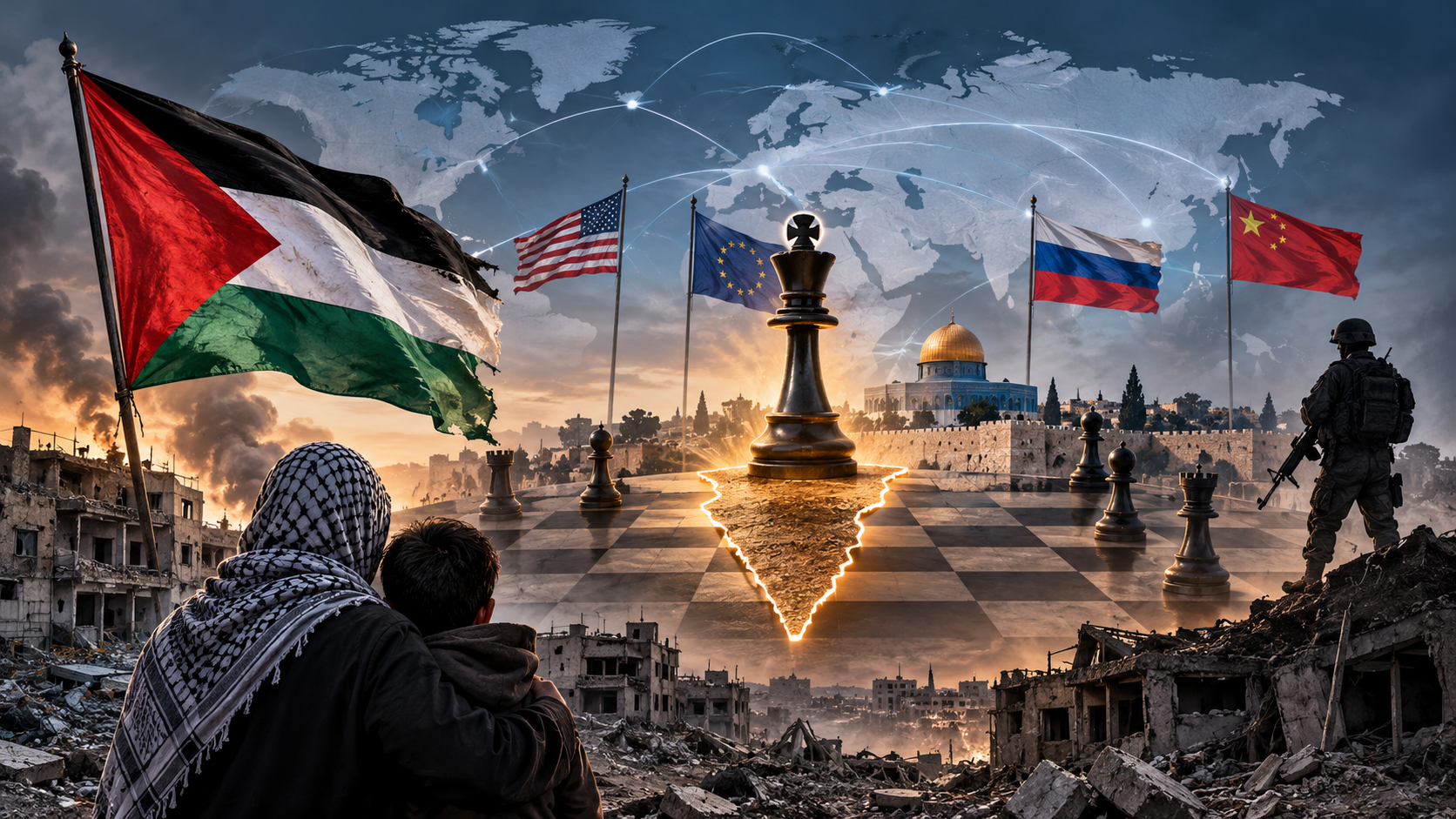
The inclusion of Gaza in the political declaration accompanying the Turkish Qatari agreement was not merely a matter of protocol. It gave a bilateral defiance agreement a language directly connected to the priorities of Arab and Muslim public opinion. Herein lies the paradox with the "Mecca Alliance", whose declaration appeared confined to the vocabulary of security and sovereignty, leaving the Palestinian cause outside the picture. Its critics filled this vacuum with questions about the alliance's purpose and limitations, with some describing it as "empty" or arguing that it did not address Israel.
Ankara and Doha, by contrast, linked their declaration to Gaza, broadening its political significance and granting it symbolic and popular capital that the discourse of the trilateral alliance lacked. However, the strength of this presentation should not obscure the distinction between a political message and a military commitment. Allocating space to Gaza in a statement or declaration does not establish that the two parties have pledged to intervene directly in the Gaza Strip without coordination with the occupation and within its conditions and policies, one of which is the exclusion of Türkiye and Qatar from any role in Gaza. This has absolutely no connection to the deface alliance between the two countries.
Accordingly, it would be incorrect to assert that Türkiye and Qatar obtained prior American approval to intervene in Gaza, or that Washington authorized them to pursue a political course that had been prepared for through the media. A reference to Gaza alone is insufficient to establish such an understanding, and the available information contains no publicly disclosed evidence to confirm it. Rather, the issue's appearance in the context of supporting Trump's initiative and its first phase points towards a more cautious interpretation.
This cautious reading suggests that the declaration sought to establish a political position within the framework of the initiative, rather than announce an independent confrontation or new political powers capable of rescuing Gaza. This does not rule out the possibility of genuine political consultations concerning Gaza, but it does not justify turning a possibility into an established fact, nor turning it into an open marketplace for celebrating unfulfilled assumptions, which subsequent events have demonstrated were met with humiliating Israeli disregard for the parties involved.
The most questionable aspect remains that political discourse may raise popular expectations without changing the balance of commitments on the ground. Emphasizing Gaza gives the declaration a meaning of solidarity, but it does not, in itself, address the mediators' failure to control Trump's plan or compel Israel to fulfil its obligations. Therefore, the impact of this presence remains primarily political and media-related, linking the agreement to an issue deeply rooted in public consciousness. It consequently becomes difficult to present the agreement as a security arrangement isolated from the region's wider issues.
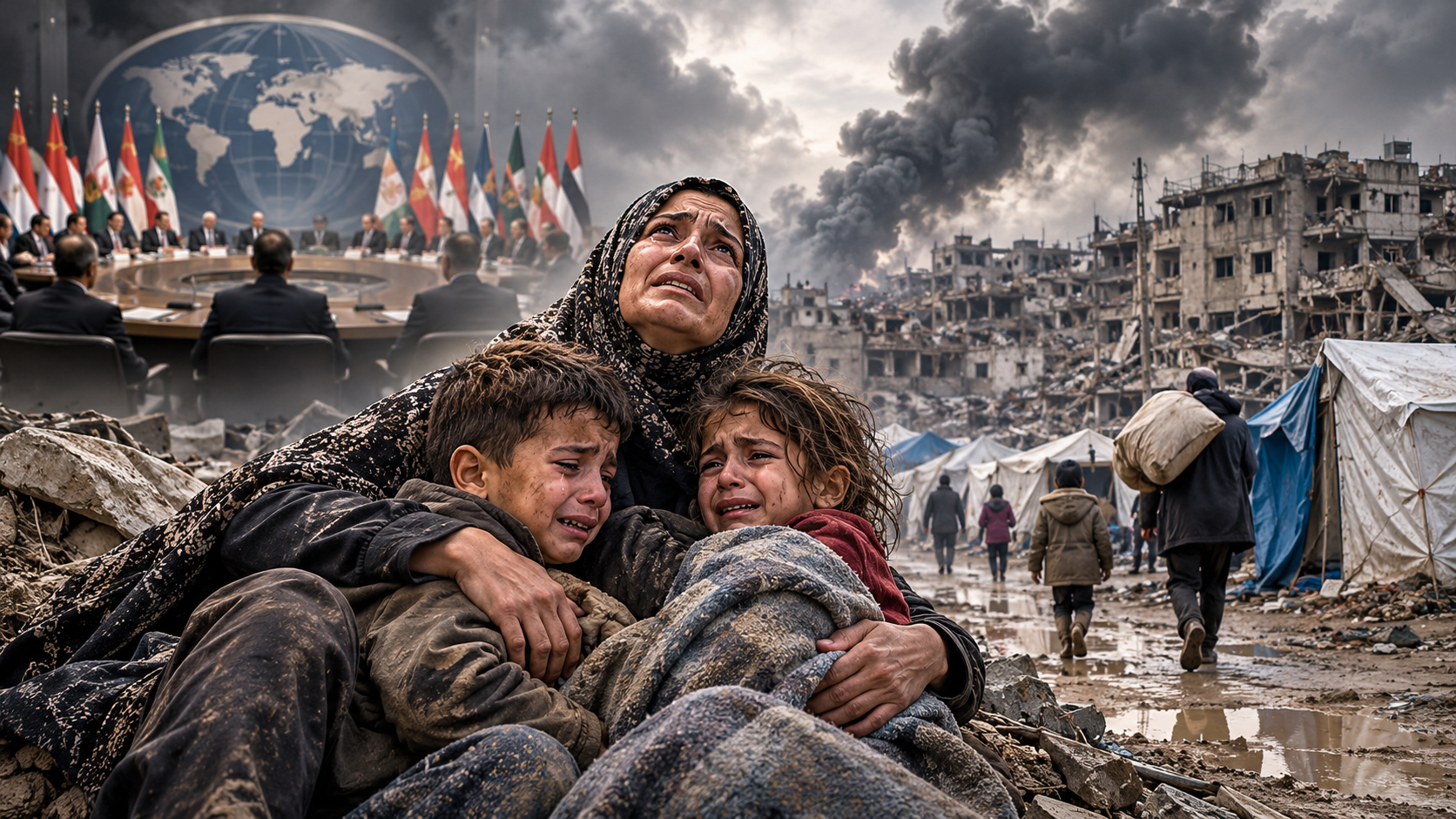
Setting aside the particular nature of Qatar's defense agreement, with Türkiye being the common factor in the recent surge of new defense agreements across the region, we conclude that Gaza's presence in the Turkish Qatari declaration is more likely to have served as symbolic and rhetorical capital than as a substantive political component at the heart of the defiance agreement. Gaza has been left by the sponsors of de-escalation as easy prey for the occupation for more than a year since the agreement was concluded, and for more than three years of the war of extermination and starvation.
Nevertheless, taken as a whole, this is a highly remarkable presence, one that enabled Ankara and Doha to gain popular momentum that the "Mecca Alliance" declaration did not seek to engage with to the same extent. When Palestine was absent from the alliance's language, the space for questioning it widened. When it appeared in the Turkish Qatari discourse, the agreement acquired broader moral legitimacy beyond its defiance scope, without necessarily implying a corresponding expansion of its actual commitments. This demonstrates the considerable popular weight and public resonance generated simply by mentioning Gaza in any new regional initiatives or orientations across the region.