Introduction
The Gaza war that erupted on October 7, 2023, was not merely another round in the series of Arab Israeli wars; rather, it constituted a watershed moment in the Middle East’s regional order. For the preceding two decades, a central assumption had prevailed among policymakers: that the Palestinian issue could be contained and managed, and that the path of economic integration and political normalization could transcend it without resolving it. This assumption was manifested in the Abraham Accords, economic corridor projects, and the redefinition of regional security priorities around confronting Iran rather than the Palestinian-Israeli conflict.
The Gaza war came to overturn this assumption and return the Palestinian issue to the center of the geopolitical equation, not merely as a humanitarian or moral issue, but as a variable determining the legitimacy of regimes, the stability of alliances, and the trajectories of trade and energy. How, then, did the Gaza war reshape the geopolitical structure of the Middle East?
Realism Theory and the Source of Threat
Through the lens of Neorealist theory, specifically the concepts of balance of power and balance of threat developed by Stephen Walt, states do not form alliances solely on the basis of the balance of material capabilities, but rather on the basis of their perceptions of threat.
October 7 led to a redefinition of the source of threat in the region. After the Iranian threat had been the primary determinant of alliances, the threat arising from the absence of a political settlement and from the eruption of the situation in Palestine returned to impose itself as an existential threat to regional stability.
We find that the Middle East has shifted from a system of “conflict management” to a system of “conflict reproduction,” in which Gaza is no longer a geographical periphery, but a geopolitical center of gravity that redirects the policies of major and minor powers alike.
The Collapse of the Assumption of Separating Economics from Politics
Before the war, a discourse prevailed that separated economics from politics and assumed that economic connectivity projects could succeed independently of a political solution. The India–Middle East–Europe Corridor (IMEC) and Eastern Mediterranean gas projects were among the most prominent manifestations of this discourse.
However, the war exposed the fragility of this separation. The escalation of violence led to the freezing of normalization tracks, the disruption of corridor projects, and the reintroduction of geopolitical risk into investment calculations. Red Sea attacks also demonstrated that the security of maritime corridors cannot be guaranteed through bilateral agreements alone but requires addressing the roots of the conflict.
Thus, economics once again became subordinate to politics rather than a substitute for it.
The Repositioning of Regional Actors
The war compelled every regional actor to reassess its position. Egypt found itself facing a complex equation combining the preservation of its peace treaty, the protection of its national security in Sinai, and responding to popular pressure rejecting displacement. Cairo chose a strategy of cautious containment, combining an explicit rejection of displacement with engagement in mediation.
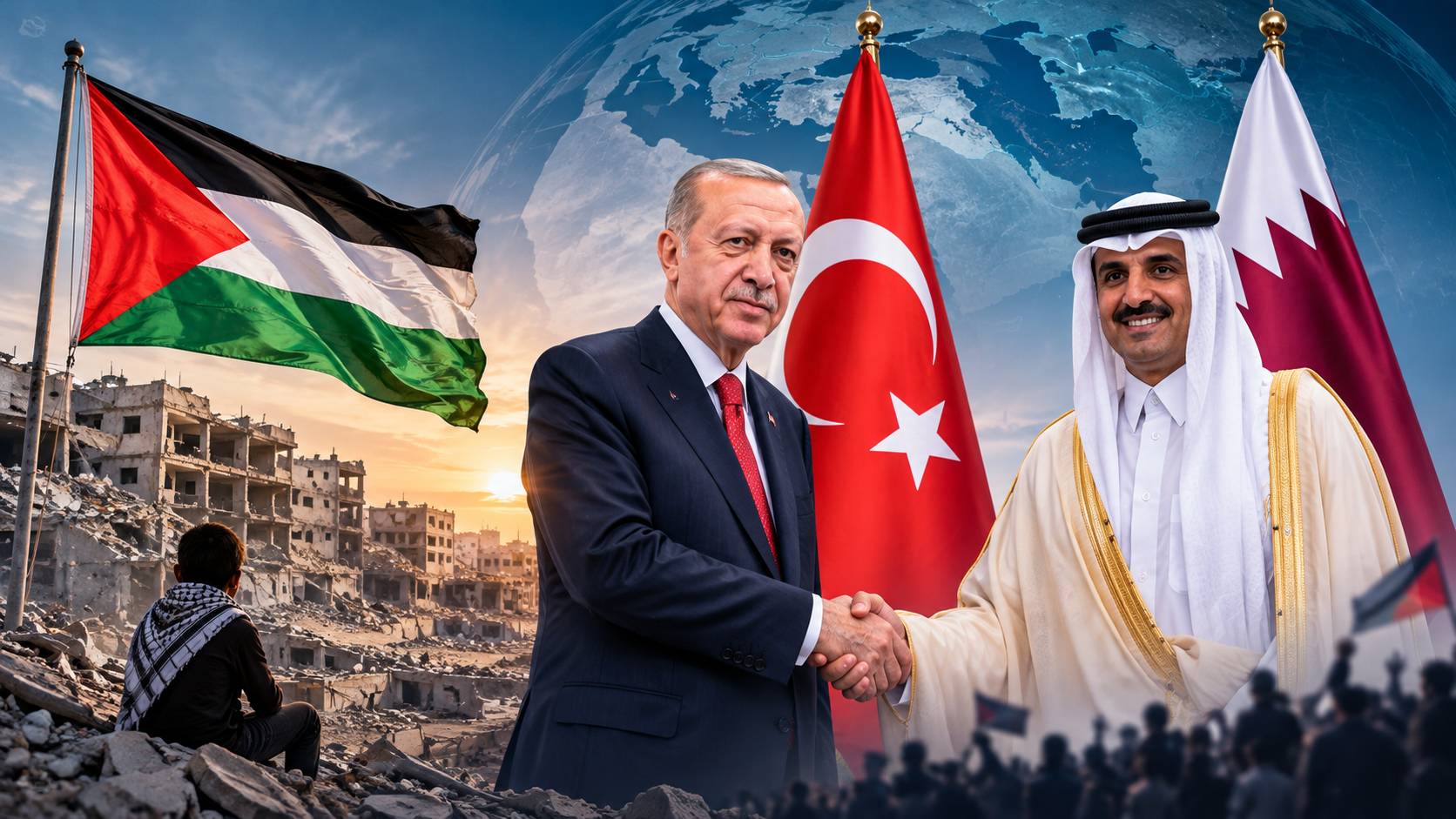
In contrast, Qatar’s role as an indispensable mediator grew, leveraging its soft power and its ability to communicate with all parties. Qatari Egyptian mediation demonstrated that small and middle powers can plan pivotal roles when the instruments of major powers become ineffective.
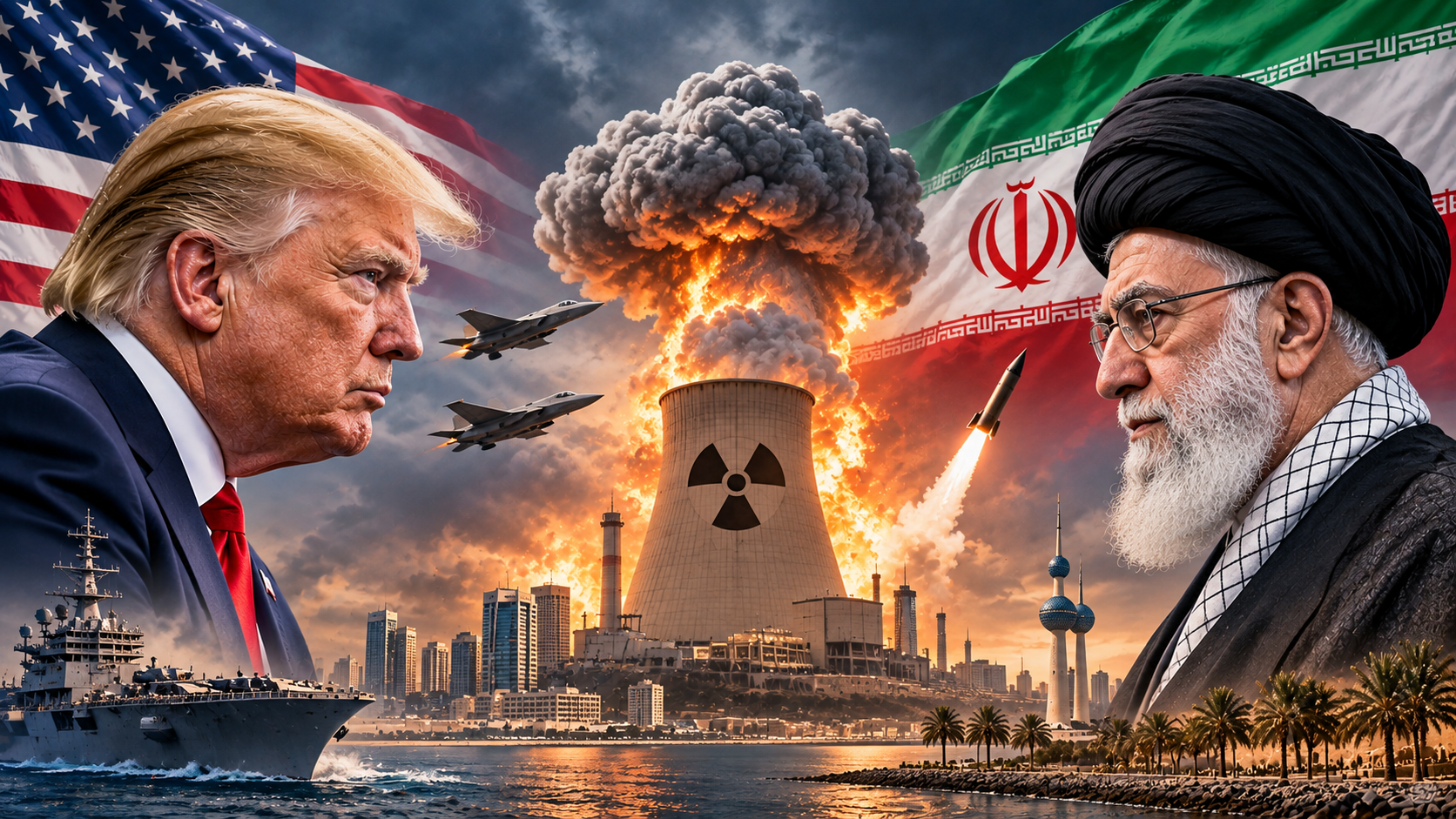
As for Turkey and Iran, they moved within a framework of competition and situational coordination. Both sought to leverage the war to strengthen their influence without sliding into direct confrontation. Meanwhile, Saudi Arabia and the UAE reassessed their normalization calculations and linked any progress in this regard to a clear political track for the Palestinian issue, after normalization had previously been presented as an independent track.
The Rise of Non-State Actors and the Changing Concept of Deterrence
One of the most prominent post-October 7 transformations was the emergence of non-state actors as influential forces in the regional structure. These actors are no longer merely proxies of states, but rather flexible networks capable of influencing the trajectories of war, the economy, and maritime security.
This reality produced a new model of asymmetric deterrence, based on the ability to inflict pain on the adversary and disrupt its interests without the need for conventional military superiority.
From Gaza to Lebanon, Yemen, and the Red Sea, deterrence has become distributed and multi-front, making it more difficult for Israel and the United States to contain it through conventional warfare instruments.
The Return of Major Powers
The war compelled the United States to return to direct engagement in the region, after years of talk about withdrawal and pivoting toward Asia. However, this engagement was compelled and defensive in nature, aimed at containing escalation rather than reshaping the regional order.
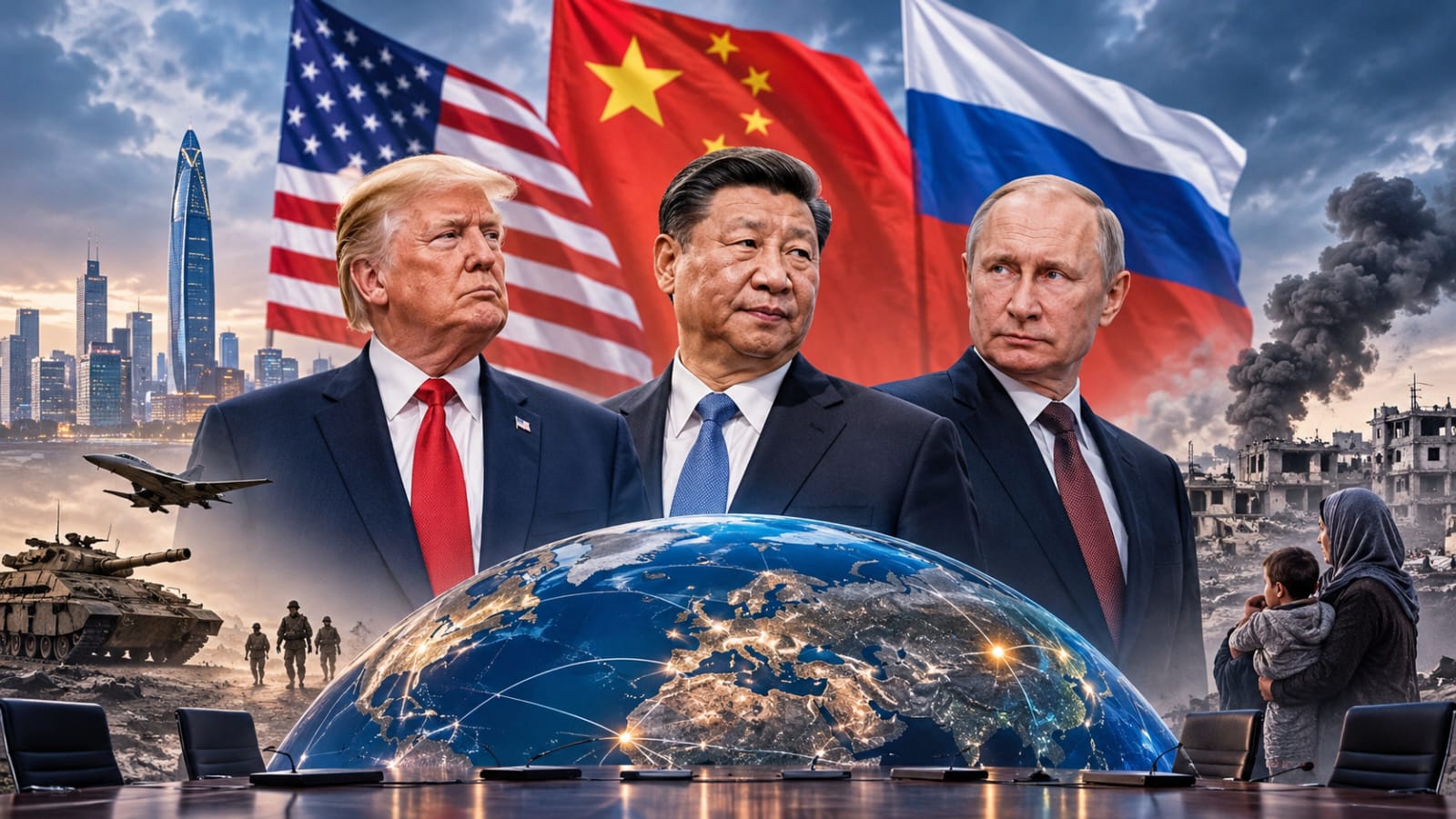
In contrast, China and Russia capitalized on the vacuum resulting from declining confidence in the American role by supporting the discourse of multipolarity, without becoming directly involved militarily.
Thus, the Middle East has become an arena of competition among major powers, without any of them possessing the ability to impose a comprehensive settlement.
Conclusion
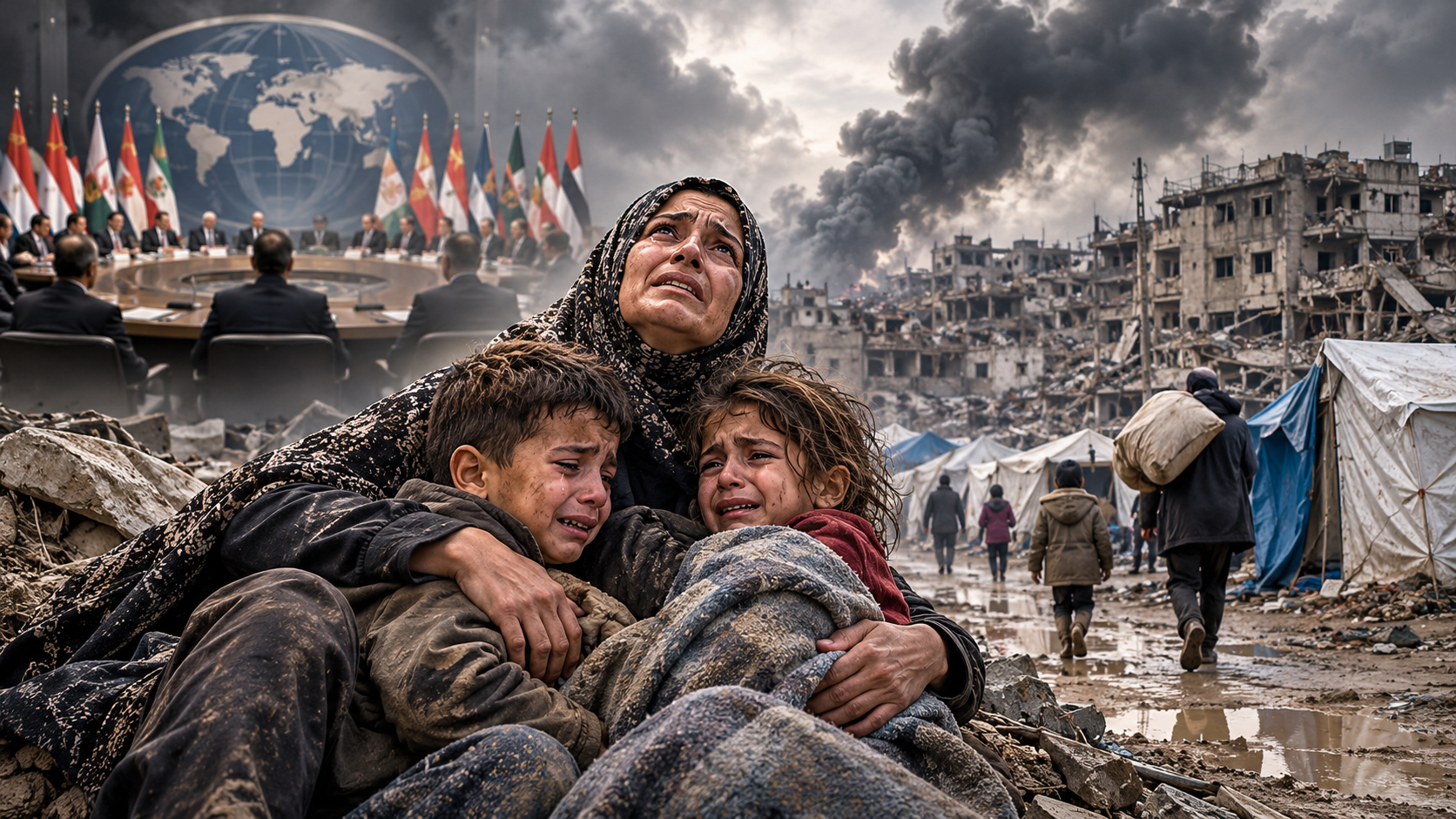
The post-October 7 landscape is not a continuation of what preceded it. The regional order has shifted from managing conflict behind the scenes to open confrontation on the table, and the Palestinian issue has once again become the central determinant of legitimacy and stability. Integration projects that bypassed politics have eroded, while the roles of mediators and non-state actors have grown.
The regional future will not be built on bypassing the Palestinian issue, but on how it is addressed. Any new regional order that fails to take this variable into account will remain fragile and vulnerable to explosion at any moment.
Accordingly, returning the Palestinian issue to the center leaves the question open: **Does the new regional order possess the capacity to accommodate this central variable, or will it continue to manage its recurring explosions?